

Carbon Yachts
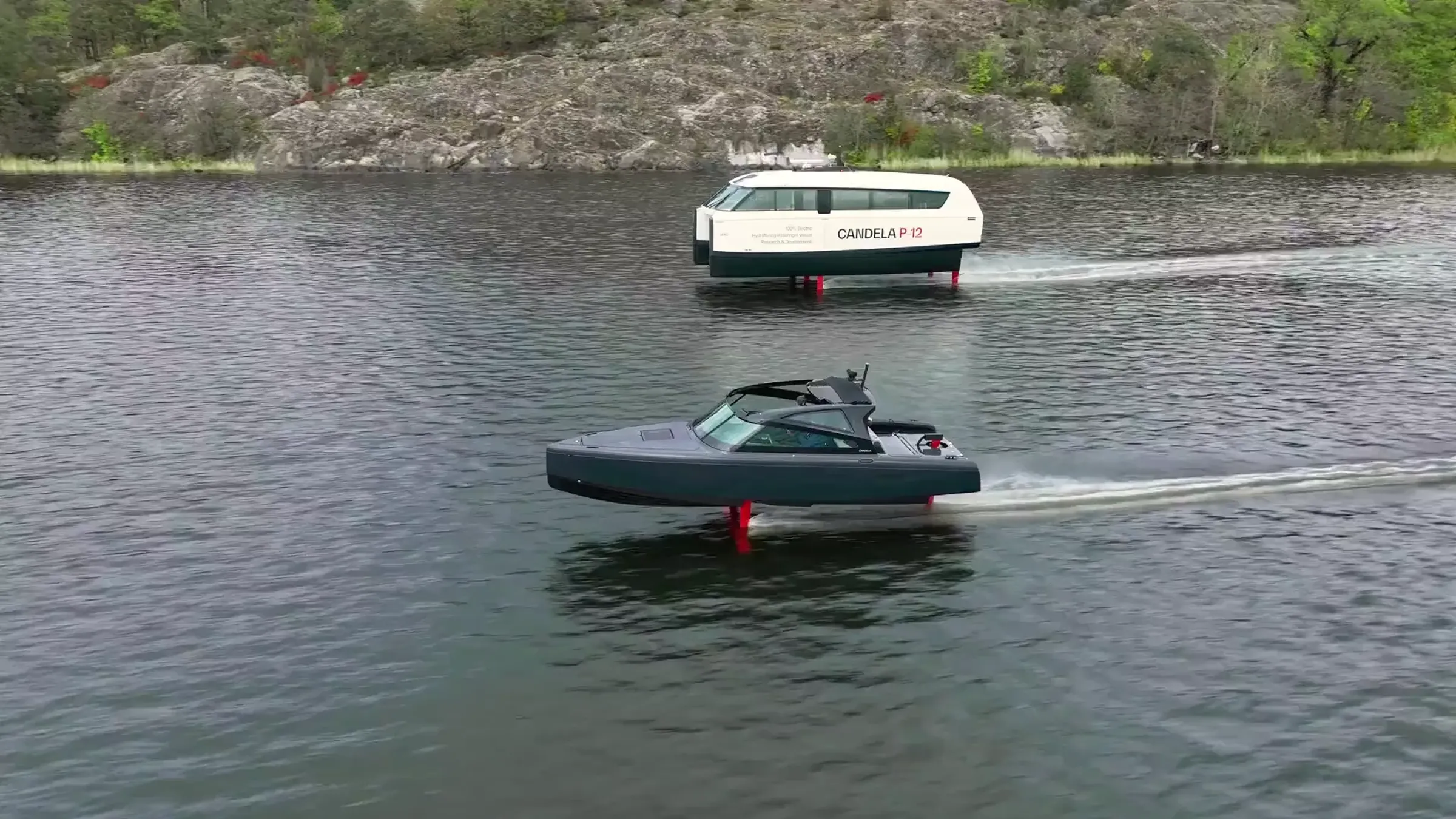
Candela Boats & Ferries P-12 electric hydrofoil passenger ferry flying above the water.

Candela Boats & Ferries P 12

Candela Boats & Ferries
THE BOAT

Fly the route. Leave nothing behind but time saved.

The Candela Boats & Ferries P-12 does something no conventional ferry can: it uses 80% less energy to get there, and the passengers barely notice the crossing. Hull up, foils trimmed a hundred times a second by a flight controller borrowed from aerospace thinking, and the chop that rattles teeth on a diesel run simply stops. The cabin settles to 63 decibels at cruise. Conversations stay easy. Coffee stays in the cup.

That efficiency is the whole equation rewritten. Up to 98% less CO2, running costs that undercut diesel by a margin that changes what routes are viable, and a charge from a standard DC fast charger in under an hour.
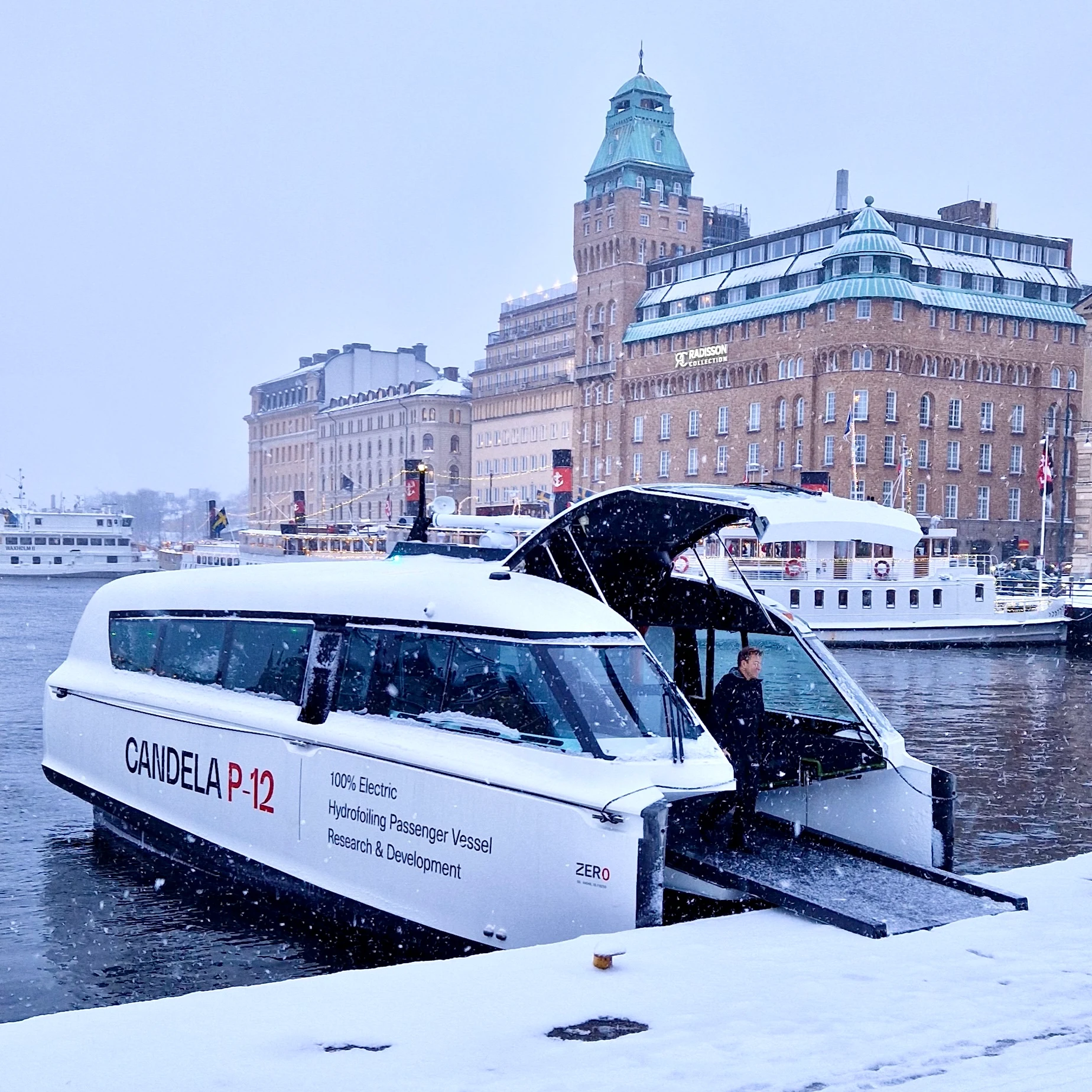
Candela Boats & Ferries P-12 — 20231128_090731 2
01IN SERVICE, WORLDWIDE

The template cities are already copying

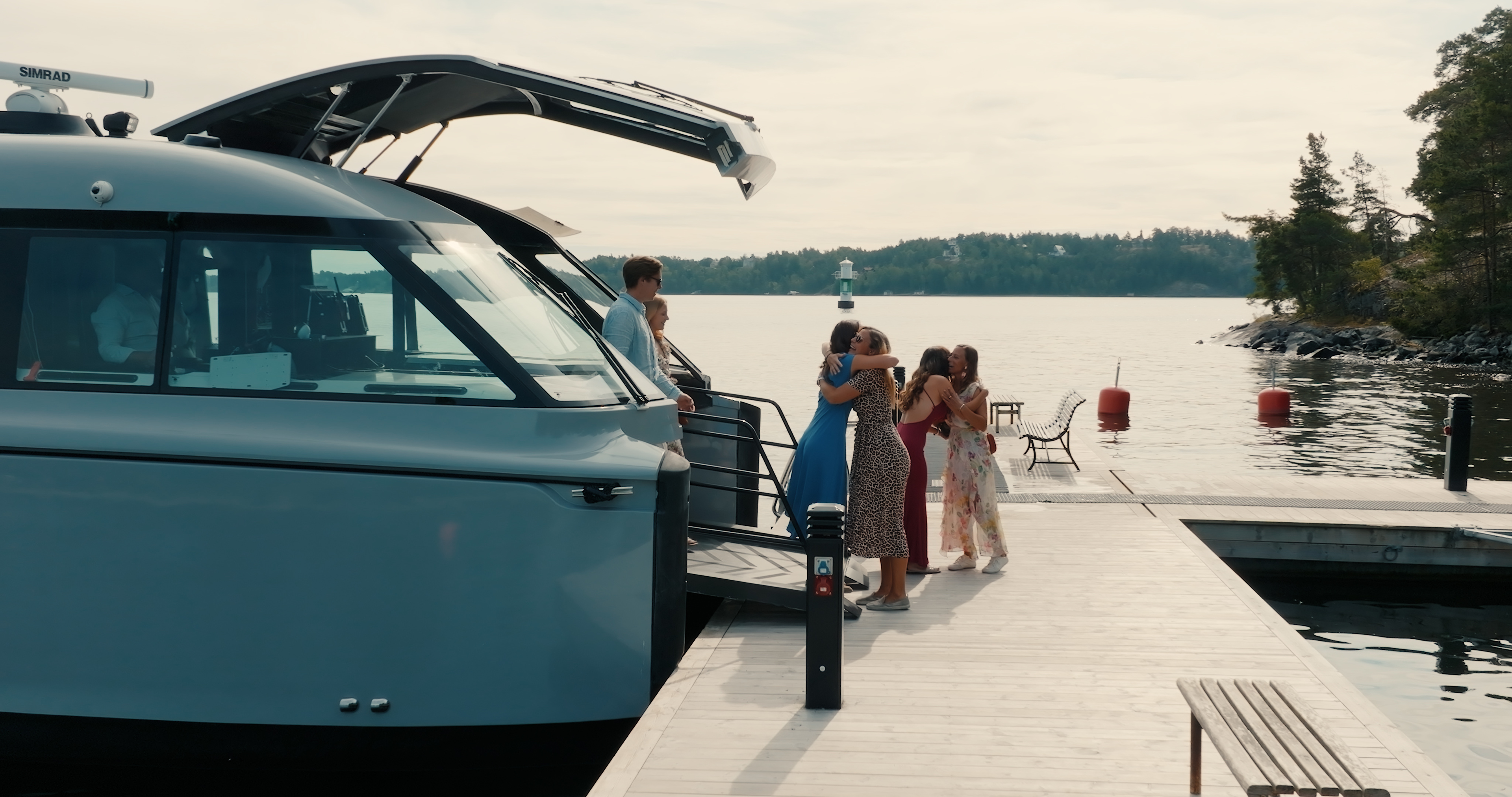
When Nova lifted off in Stockholm in 2024, it did not just prove the concept, it triggered orders from Mumbai to Berlin, the Maldives to New Zealand, with the factory now scaling to 40 vessels a year. The Candela P-12 is the first electric hydrofoil ferry in serial production, which means operators elsewhere are not buying a prototype: they are buying a vessel with a public-transport service record, a Swedish Transport Administration sign-off, and a route that now runs daily.

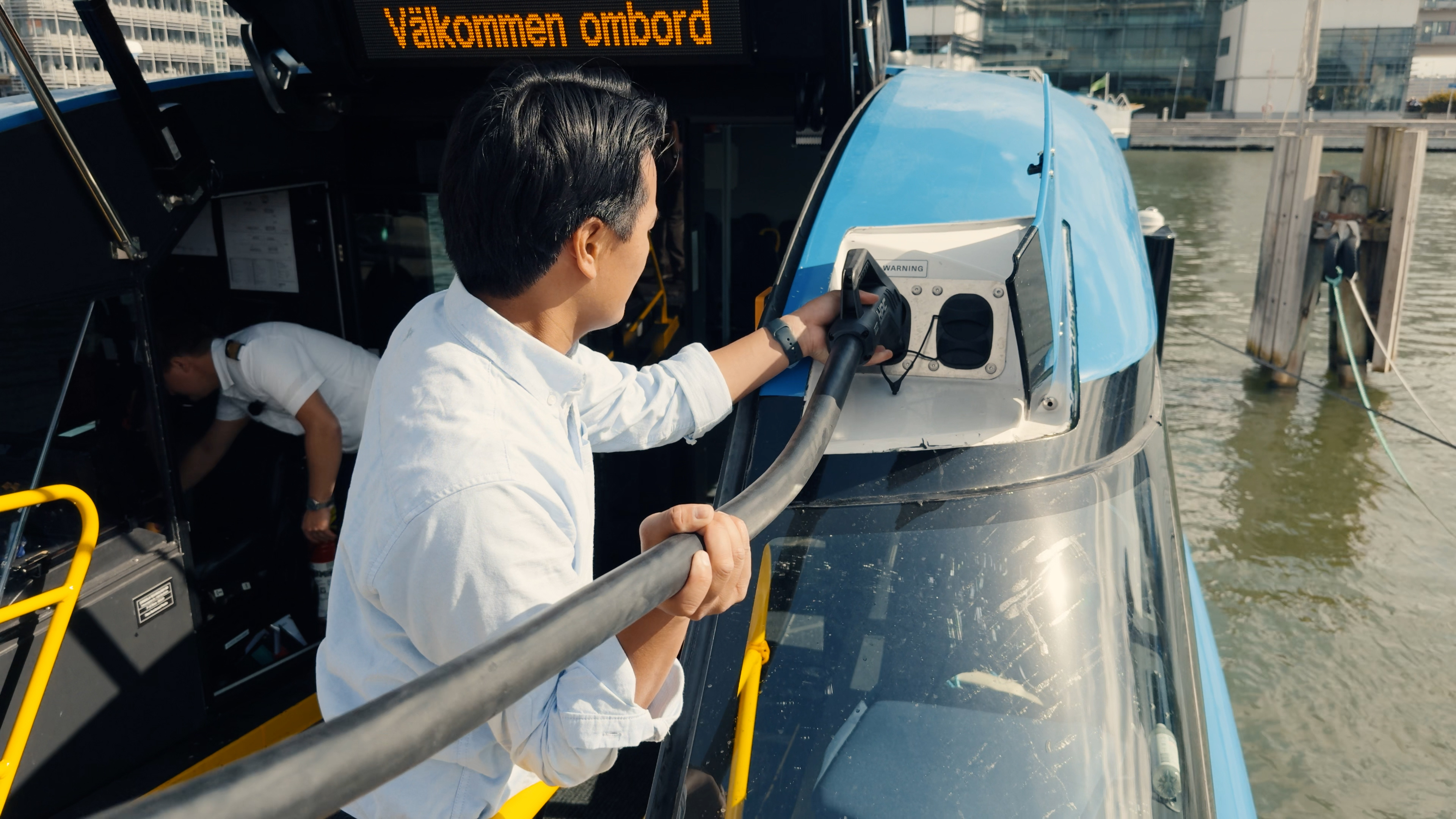
Candela Boats & Ferries P-12 — Charging 13
02PLUG IN ANYWHERE

No megawatt charger. No fixed terminal.

Other electric ferries are anchored to their infrastructure: battery-swap stations costing hundreds of millions, fixed terminals, routes that can never stray. The Candela Boats & Ferries P-12 charges from a standard DC fast charger, the same technology already deployed at car charging points, and reaches 10 to 85 per cent in roughly 45 minutes. That is the real unlock: not just a cleaner ferry, but one that can go wherever a charger exists, which increasingly means almost anywhere.

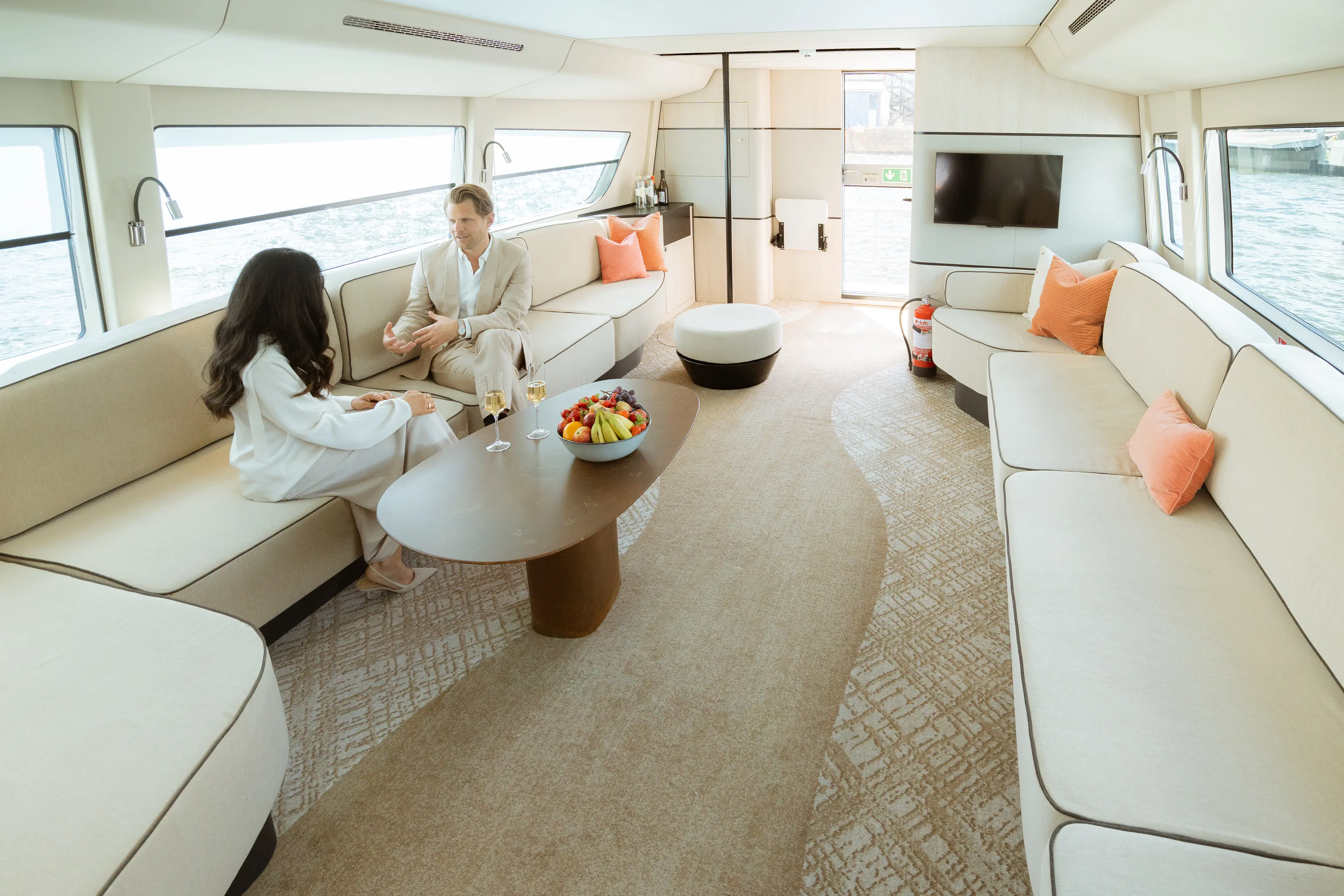
Candela P-12 — interior · dsc04801
03THREE WAYS TO FLY

One platform, every operator covered

The Candela Boats & Ferries P-12 comes in three configurations built on the same proven hydrofoil platform. The Shuttle carries 30 passengers on high-frequency public routes, turning over a stop in two minutes flat. The Business seats up to 20 in a quiet, configurable cabin suited to corporate transfers and VIP connections. The Voyager drops to 12 seats and opens the interior to full bespoke specification: every surface, every finish, your brief. Same foils, same flight, three completely different operations.

Candela Boats & Ferries P-12 — CANDELA_P12_250814_FS5_ATOMOS_#2_HERO_013.00_00_05_09.Still014
04ARRIVE REFRESHED

Passengers step off feeling nothing

On a conventional speedboat running at 25 knots, the cabin sits somewhere between 85 and 95 decibels: roaring engines, slamming hulls, the kind of crossing that leaves people white-knuckled and queasy before they even arrive. The Candela P-12 measures 63 decibels at cruise, quieter than a modern express train, because 90% less g-force means the chop simply does not reach the cabin. Seasickness stops being a variable. Passengers arrive ready for what comes next.

FAQ

Common P-12 questions, answered.

The Candela P-12 is a commercial electric hydrofoil passenger ferry. It is designed for fast urban routes, resort transfers and premium passenger operations where low wake, low noise and energy efficiency matter.

The P-12 platform is offered in Shuttle, Business and Voyager configurations. Shuttle prioritises passenger capacity, while Business and Voyager adapt the cabin and seating for premium transfers and resort operations.

It suits ferry operators, resorts, waterfront precincts and transport providers that need a fast passenger vessel with minimal wake, low operating noise and electric propulsion.

The Candela Boats & Ferries P-12 is the fastest electric passenger vessel in service, holding a 25-knot service speed and a top speed exceeding 30 knots, quicker than the diesel ferries it is built to replace. In Stockholm, running as the 'Nova' on the Ekerö corridor, it cut commute times by roughly half compared to conventional services on the same route.

The Candela Boats & Ferries P-12 flies its hull clear of the water at cruise speed, and a Flight Controller trims the foils 100 times a second to hold it dead level, cutting the g-forces passengers feel by 90 per cent compared to a conventional ferry in the same conditions. The result is quiet, spray-free and almost entirely free of motion sickness; most passengers describe it as closer to a smooth train ride than anything they expected from the water.

The Candela Boats & Ferries P-12 charges from standard DC fast chargers, the same hardware already deployed for electric cars, and refills its 336 kWh battery in under an hour, with no megawatt dockside installation required. That removes the hidden cost that makes electrifying conventional ferries so expensive: operators can deploy the P-12 using existing or modest new infrastructure.

The Candela Boats & Ferries P-12 carries 30 passengers in its Shuttle configuration, with Business and Voyager variants available for executive transfers and resort work. All three ride the same hydrofoiling platform; the differences are in cabin fit-out and capacity rather than performance.

The Candela Boats & Ferries P-12 produces around 98 per cent less CO2 per trip than an equivalent diesel vessel, running on electricity with no exhaust and almost no wake. Because foiling cuts energy consumption by 80 per cent, the savings are real even where the grid is not fully renewable, and the running cost per passenger-mile is a fraction of diesel.

The Candela Boats & Ferries P-12 uses twin C-POD motors with thrust vectoring to manoeuvre with precision in confined berths, even in swell. Its bow ramp handles dock heights from 0.3 to 1.9 metres, works with most existing infrastructure without modification, and the full foiling-to-docked-to-foiling cycle takes about two minutes.