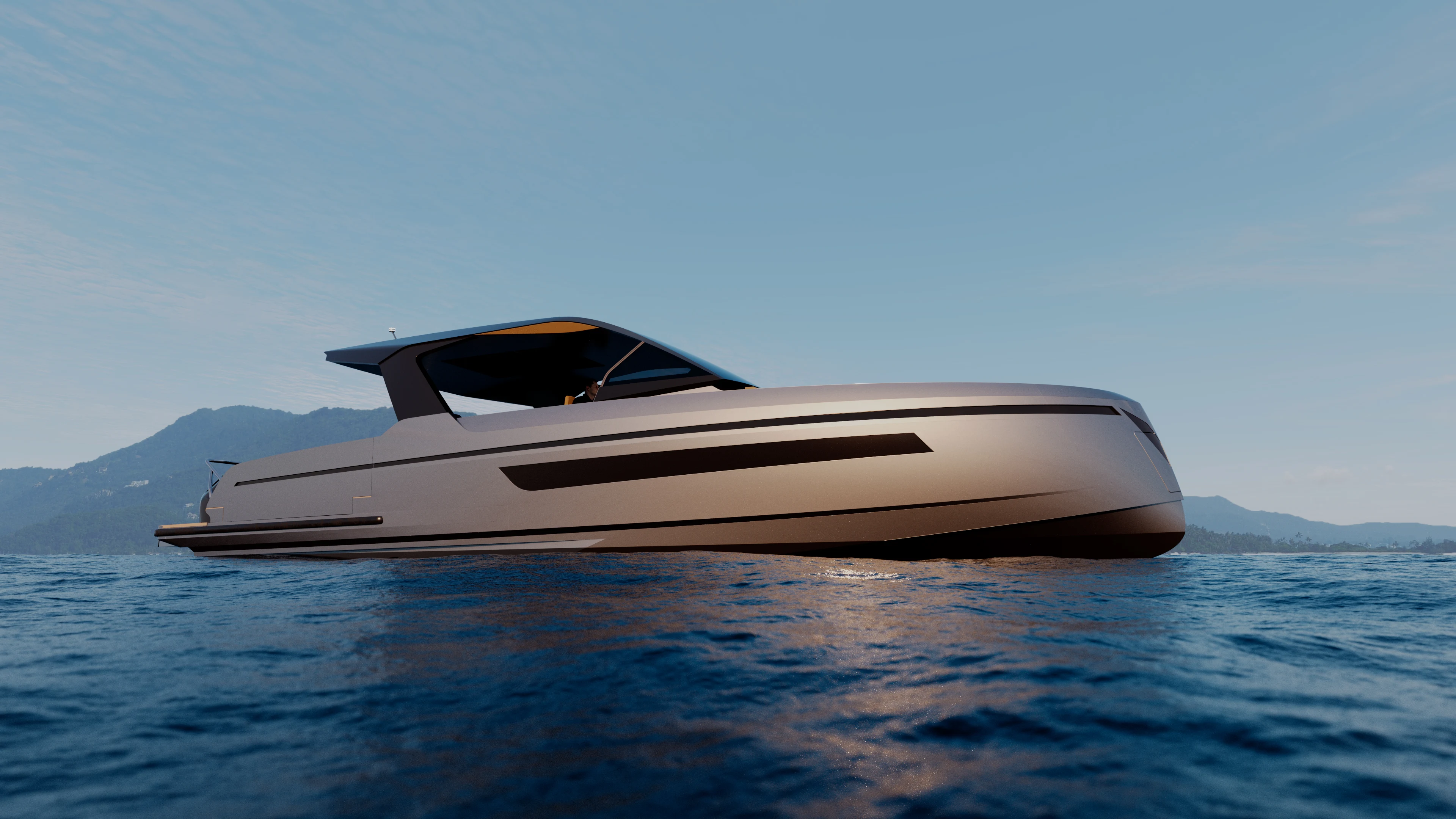
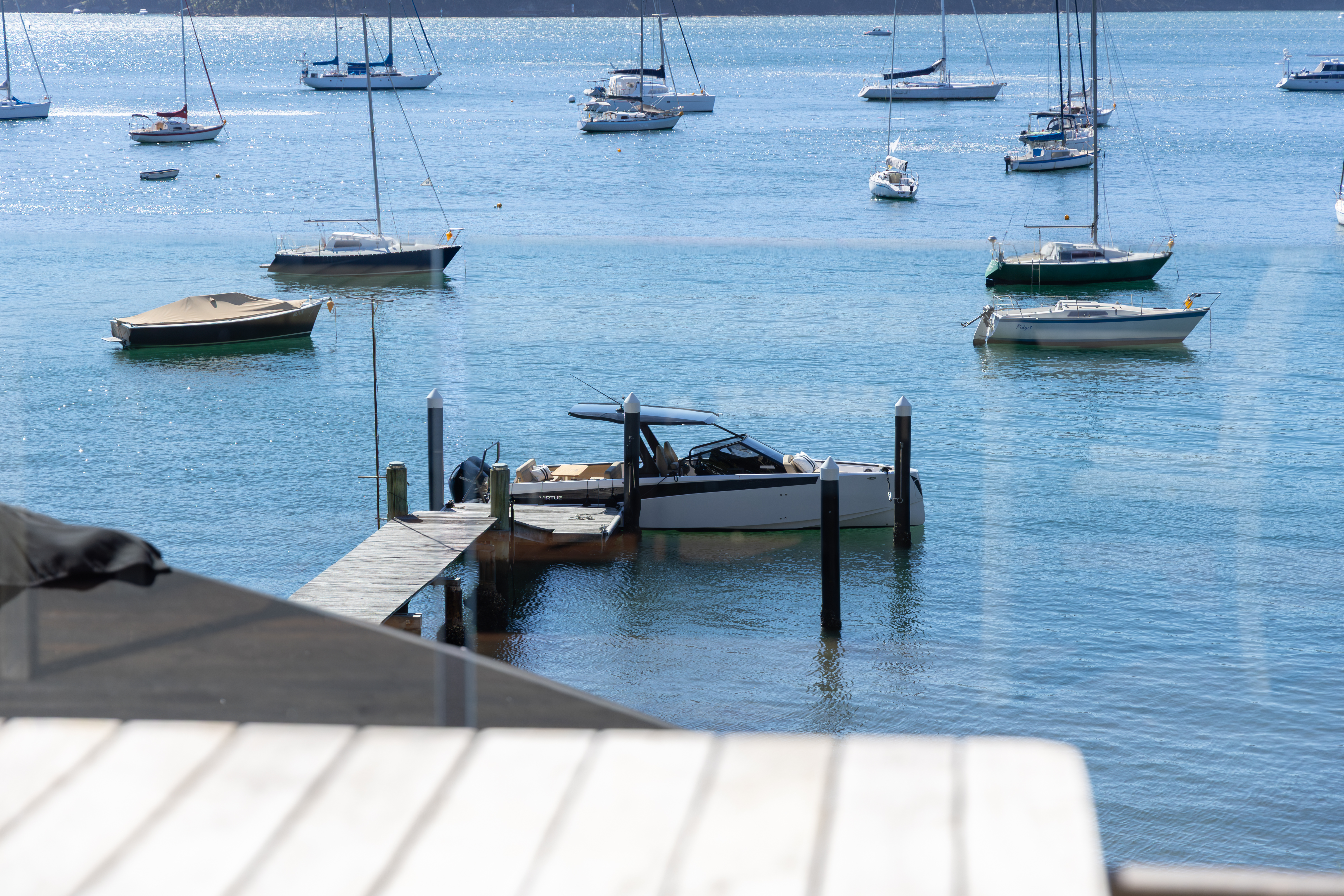
The Virtue Yachts V33 is one platform offered three ways: Open, Top and Cabin. Same hull, same outboard performance, same basic deck geometry. What changes is how much of the sky you keep. That sounds like a styling decision. It is not — it decides which days you use the boat, and it is worth working through honestly before choosing.
What all three share
Every V33 runs on the Petestep twin-stepped hull, a Swedish-designed running surface that redirects spray downward and aft for a drier, lower-drag ride. We have written about what Petestep changes from the helm separately; the short version is that the hull behaves the same way regardless of which layout sits on top of it.
The deck philosophy is shared, too. Fold-down side terraces open the cockpit towards the water at anchor, and bow and aft lounging areas give guests separate places to settle. Power is outboard across the range, with 50-plus-knot capability in the right specification.
At a glance, then: the differences between the three boats are the helm protection, the interior, and the season length they support. Everything else — hull, power, terraces, deck geometry — is common. That is what makes this a genuinely useful comparison rather than a trim-level exercise.
V33 Open: the fair-weather purist
The V33 Open is the most direct expression of the platform. No roof, no wheelhouse — just the helm, the deck and the water. From the driver's seat it is the most connected of the three, and at anchor it is the most open.
The trade-off is exposure. Sun, wind and spray are all part of the day, and the boat's usable season is set by the forecast rather than by the calendar. For buyers who boat mostly in settled conditions, keep their days short and value the open feel above everything, that trade is easy to make. For anyone planning long runs in changeable weather, it is the first limitation they will hit.
V33 Top: the covered middle ground
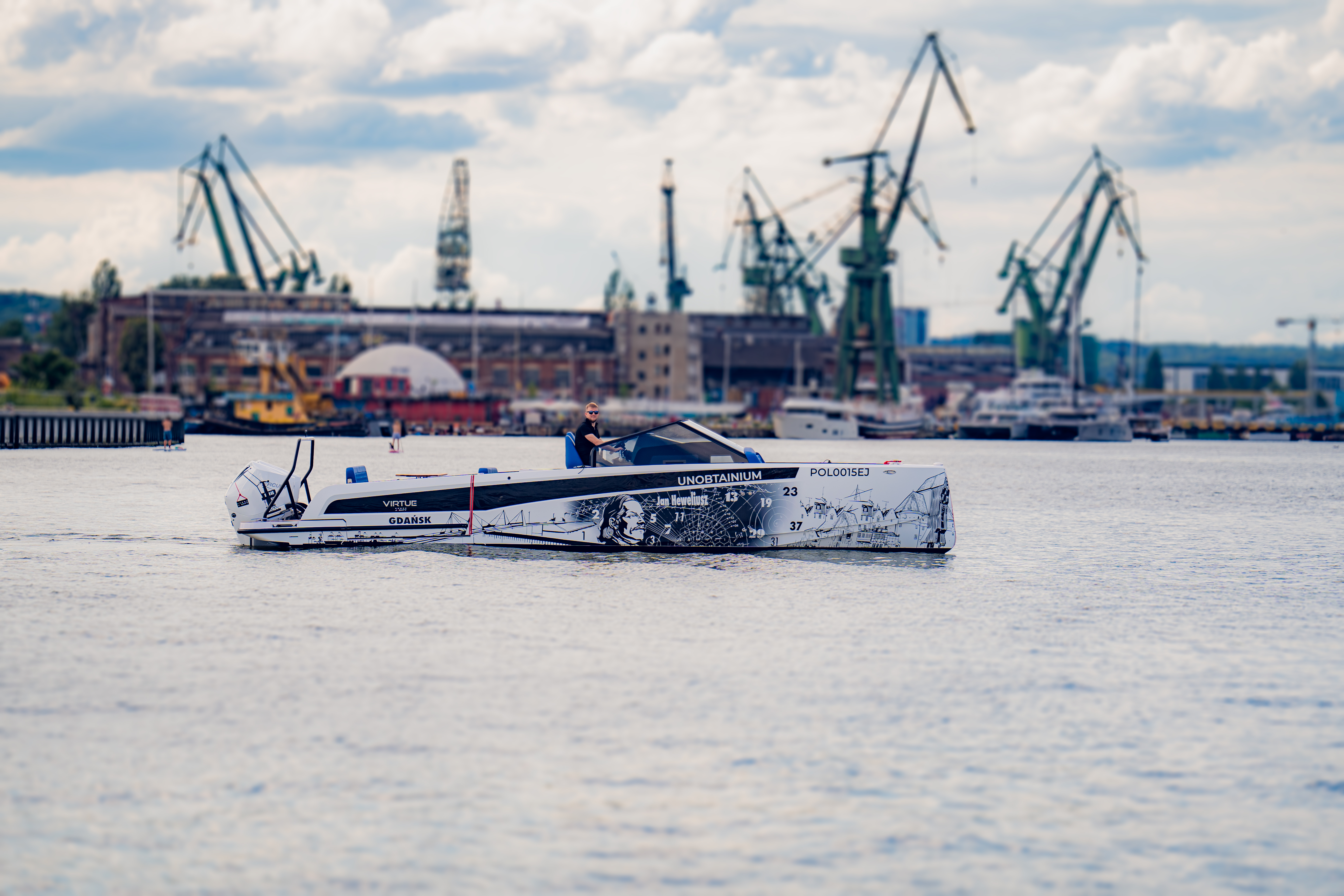
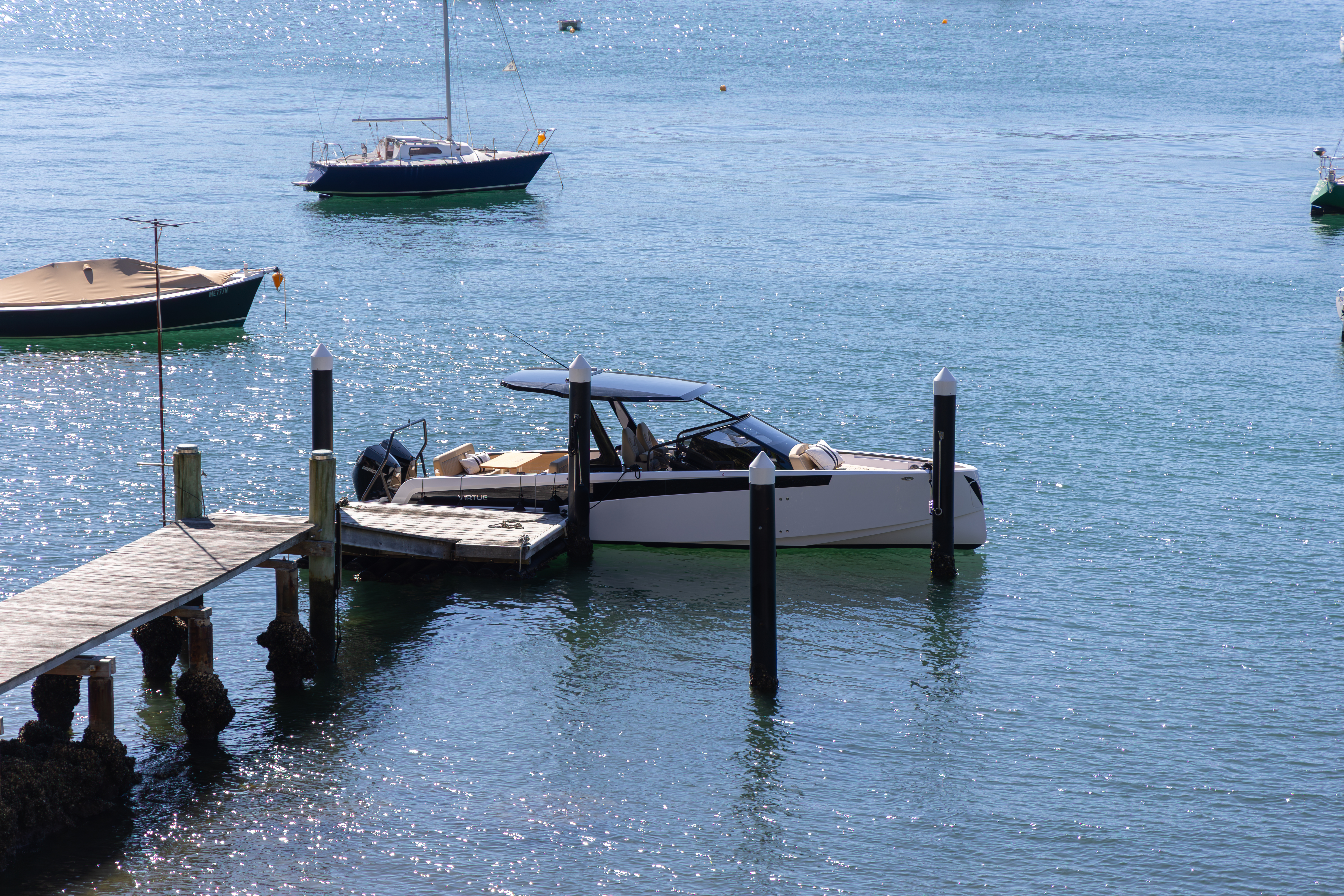
The V33 Top puts a composite laminate T-top over the helm and leaves the rest of the cockpit open. It is a smaller change than the Cabin, but in Australian conditions it is a meaningful one: the helmsman and navigator get genuine shade at speed, and the boat gains a visual anchor without losing its open character.
Underway, the Top still feels like an open boat — wind in the cockpit, spray only when the angle is wrong. At anchor, the terraces fold down and the wet bar and aft lounger do the work. The limitation is that a T-top is shade, not shelter: a building sea breeze or a wet run home still reaches everyone aboard.
V33 Cabin: the all-weather option
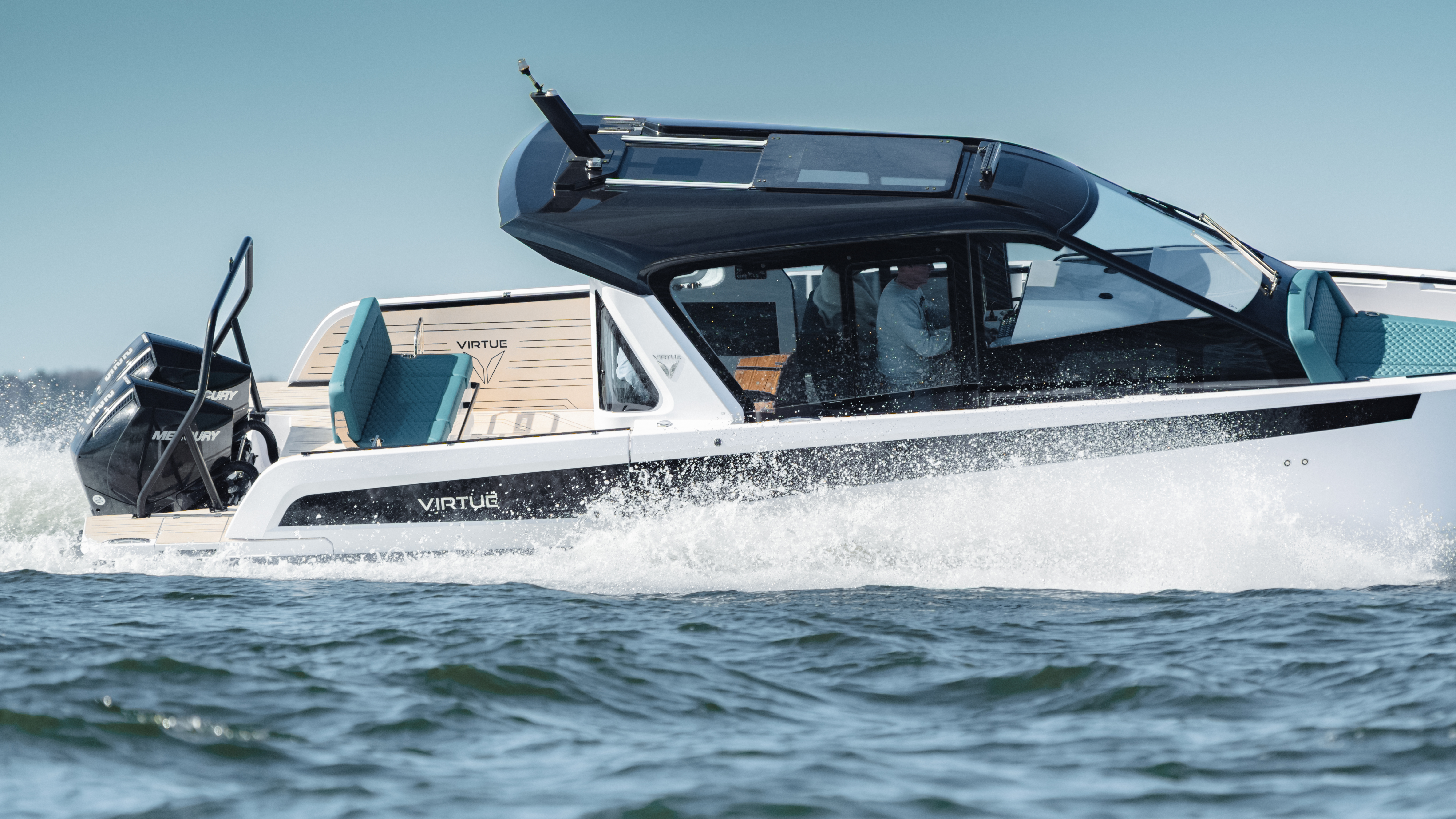
The V33 Cabin encloses the helm in a full wheelhouse and adds a Scandinavian-style interior below deck. The effect on usability is out of proportion to the visual change. Weather stops ending days; the season stretches at both ends; the run home in poor conditions becomes routine rather than an ordeal.
Below deck there is shelter for a long lunch out of the sun and the occasional overnight stop — though buyers planning regular nights aboard should look at the V45 Hard Top, with two cabins and a separate shower. What the Cabin gives up is some of the open-air feel that defines the other two. The terraces and foredeck remain, but underway, the glass is between you and the day.
How to decide
Start with the honest version of your boating, not the aspirational one. Count last season's days on the water and ask what cancelled the rest. If the answer is nothing — you boat short, local, fair-weather days — the Open gives you the most of what you actually use. If the answer is sun and distance, the Top's covered helm earns its place quickly; it is the layout we see work hardest for the most people in Australian conditions. If the answer is weather, the Cabin is the only one of the three that answers it.
It is also worth deciding who the boat is for when you are not driving. Guests feel exposure more than owners do — they are not the ones with the wheel to hold. If your boating is regularly a family or group affair, shade and shelter stop being preferences and start being hospitality.
Ownership practicalities
Because the platform is shared, most ownership questions have one answer across all three. Outboard power keeps servicing straightforward and repowers possible. The deck hardware — terraces, loungers, wet bar — is common where fitted, so parts and support do not fragment across the range. And the running costs that scale with use, fuel and service chief among them, are set by the hull and engines you would be getting anyway.
The one practicality that does change with layout is storage. Gear that lives in the open on an Open or Top gains a weatherproof home in the Cabin's wheelhouse and interior, which matters if the boat lives on a mooring or in a berth rather than on a trailer.
The reassuring part is that the decision carries no performance penalty. Whichever layout you choose, the boat underneath — the hull, the power, the deck geometry — is the same V33.